
Your First Five Steps
📥 Step 1 — Download and Print Your Guides
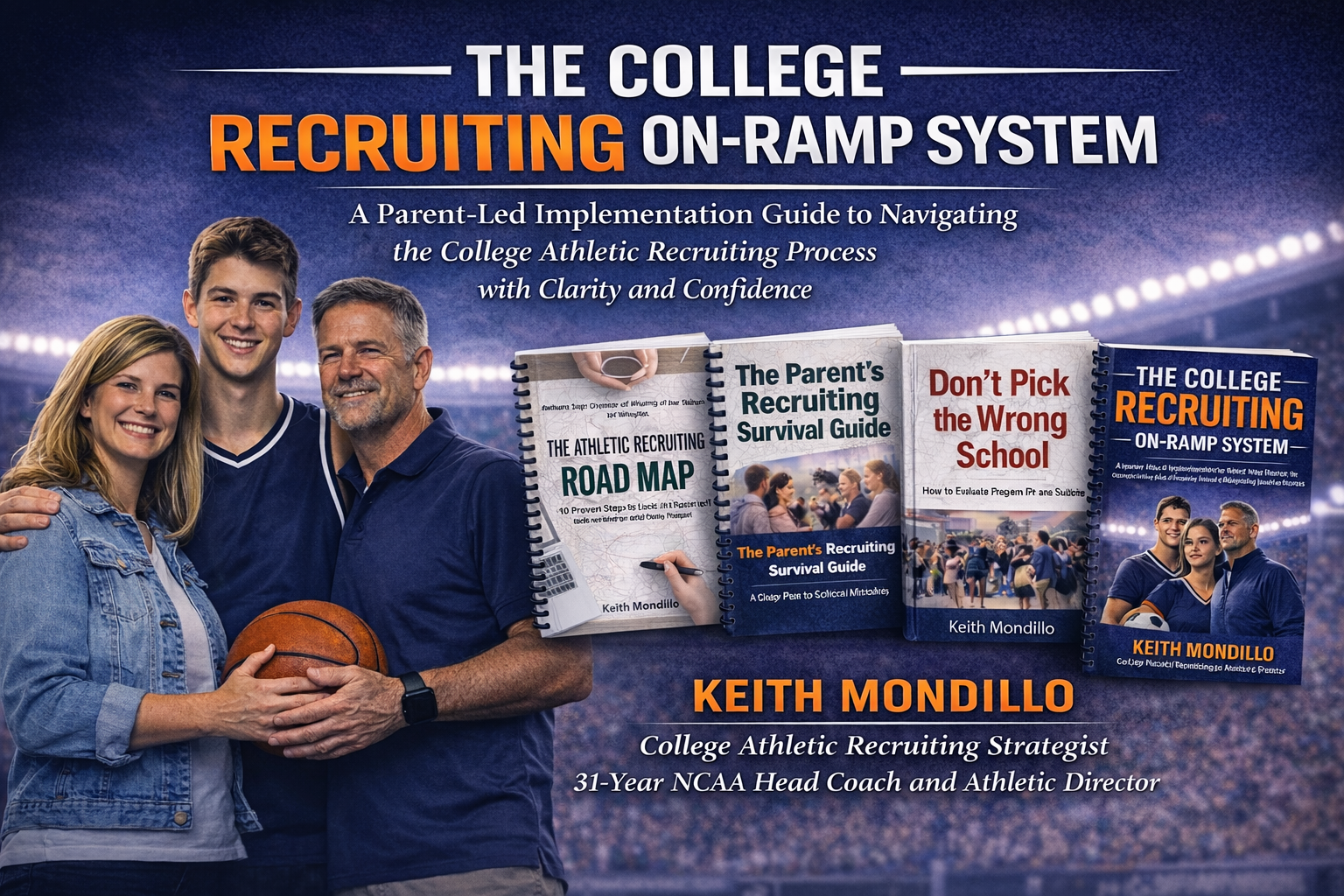
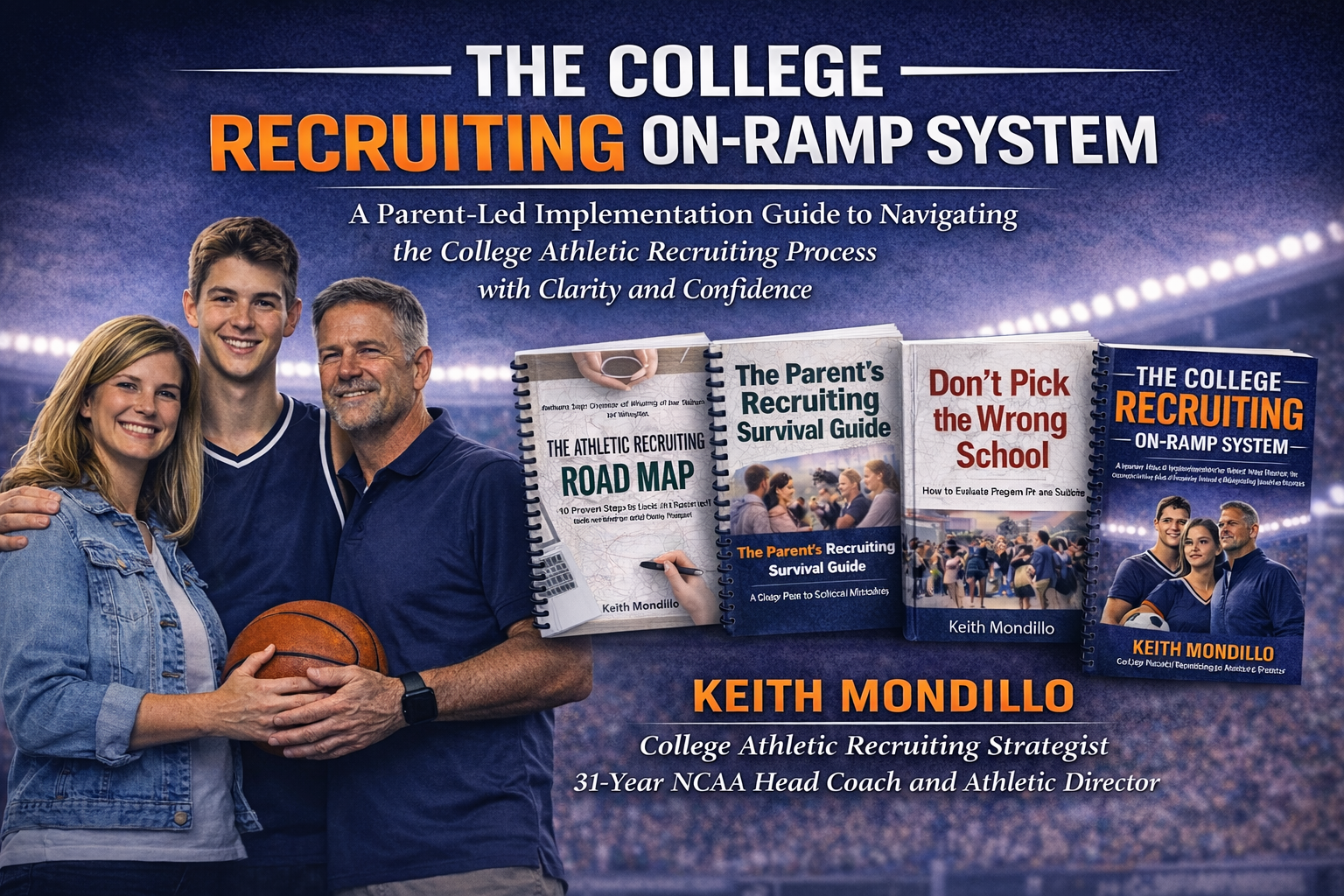
Download all of your books and the Implementation Guide now. If possible, print them and place them in a individual recruiting binders. This system works best when you treat it like a workbook. Highlight important sections, complete the worksheets, and write notes as you go. Recruiting becomes far clearer when everything is organized in one place instead of scattered across emails, social media, and conversations.
🏠 Step 2 — Set Your Family Recruiting Structure
Before contacting coaches or attending events, take time to define how your family will operate during recruiting. Decide who handles communication, how decisions will be made, and when you will review recruiting progress together each week. When the athlete owns communication and the parent provides structure and organization, recruiting becomes calm, disciplined, and far more effective.
📊 Step 3 — Complete an Honest Recruiting Evaluation
Next, evaluate your athlete’s current recruiting reality. Look honestly at their athletic level, academic profile, and physical readiness compared to current college rosters. This step prevents one of the biggest mistakes families make in recruiting. Many build school lists based on hope or reputation instead of fit. A clear evaluation helps you focus on the right level and the right opportunities.
🎯 Step 4 — Build a Strategic School List
Now begin building a disciplined target list of schools. Start by identifying programs that realistically match your athlete’s level academically and athletically. Then study each roster carefully to determine whether there is a real opportunity at your athlete’s position. Serious recruiting lists are built around opportunity and fit, not logos or reputation.
🗂️ Step 5 — Create a Recruiting Tracking System
Finally, organize your recruiting process so nothing falls through the cracks. Create a simple tracking system to record school names, coach contact information, communication dates, visits, and next steps. Organized families move through recruiting with clarity and momentum, while unorganized families often miss opportunities simply because they lose track of conversations.
One Final Thought
Recruiting often feels overwhelming because families are reacting to everything around them. The purpose of the College Recruiting On-Ramp System is to replace guesswork with structure. As you begin working through these first steps, the process will start to make sense and your family will move forward with clarity and confidence.